Booking transportation for a group is not just a question of seats. A team of 12 flying in for a conference with roller bags needs a different vehicle from 12 friends heading to dinner in Georgetown.
Here is the checklist our dispatchers use to size vehicles for groups around Washington.
Start with people and luggage
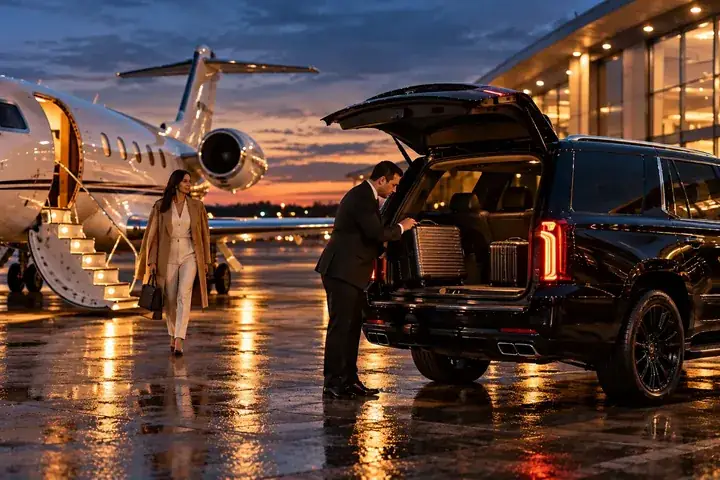
Seat count is the easy part. Luggage is where group trips go wrong. A vehicle that seats 14 will not carry 14 people plus 14 full-size suitcases unless it was chosen for that. For airport runs, count bags as carefully as passengers.
Also think about comfort. A group that will spend an hour on the road, or several hours on and off the vehicle at events, will be happier with a few empty seats.
The vehicle options
| Vehicle | Passengers | Bags | Good for | From |
|---|---|---|---|---|
| Executive SUV | Up to 6 | 5 | Small teams, families, VIPs | $110/hr |
| Sprinter Van | Up to 14 | 10 | Airport groups, teams, family trips | $110/hr |
| Executive Sprinter | Up to 14 | 14 | Executive teams, roadshows, airport groups | $150/hr |
| Stretch limousine | 8–22 | 8 | Celebrations and nights out | $110/hr |
| Minibus | Up to 24 | 20 | Hotel loops, crews, mid-size events | $160/hr |
| Mini coach | Up to 36 | 30 | Weddings, corporate events, mid-size groups | $170/hr |
| Deluxe coach | Up to 56 | 50 | Conferences, tours, large groups | $190/hr |
Rates vary by city; hourly minimums apply. A 5% fuel surcharge applies and a standard 20% chauffeur gratuity is added after your trip, plus a 3% processing fee on card payments. Tolls and parking are not included; any incurred are added to your final invoice.
One big vehicle or several smaller ones?
One coach is usually the most economical way to move a large group together. Several smaller vehicles make sense when:
- People arrive or leave at different times, such as staggered flights.
- The group splits up during the day for different meetings or venues.
- The pickup point cannot take a full-size coach, such as some downtown streets, residential areas and smaller hotels.
- You want a backup: two Sprinters keep the program running if one is delayed in traffic.
Single trips, loops and standby
There are three common ways to book group transportation:
- Point-to-point: one trip from A to B, such as the airport to the hotel. See point-to-point transfers.
- Loops: a vehicle circulates between hotels and a venue on a schedule, common for conferences and weddings.
- Hourly standby: the vehicle and chauffeur stay with your group for a set number of hours. See hourly service.
For conferences, a loop every 15–20 minutes during arrival and departure windows usually moves more people with fewer vehicles than trying to move everyone at once.
Event days and DC traffic
Washington has its own transportation challenges. State visits, motorcades, marches, races and big games can close streets around the National Mall, Capitol Hill and downtown with little notice. Experienced local dispatch plans pickup and drop-off points around these closures, keeps drivers updated during the day and builds in extra time.
Venues also matter: the Walter E. Washington Convention Center, Nationals Park, Capital One Arena and Gaylord National Harbor each have their own loading zones and event traffic patterns. See group and event transportation and National Harbor.
What to have ready when you ask for a quote
- Date and pickup times, or flight numbers for airport groups.
- Number of passengers and an honest count of bags.
- All addresses, including any stops.
- Whether everyone travels together or in waves.
- Any accessibility needs, such as a wheelchair lift.
Send us those details and dispatch will recommend the right mix of vehicles, or try the vehicle finder on our home page.